
Bingo rules and how to play the bingo game, number calling, payouts and variations vary from place to place. Basically, players buy cards with numbers on them in a 5 x 5 grid corresponding to the five letters in the word B-I-N-G-O.
Numbers such as B-2 or 0-68 are then drawn at random (out of a possible 75 in American Bingo, and 90 in British and Australian Bingo) until one player completes a ‘Bingo’ pattern, such as a line with five numbers in a vertical, horizontal or diagonal row on one of their cards and wins the prize.
There are many possible patterns to play for. See here examples of bingo patterns (link opens new window).
Bingo Rules in the United Kingdom and Australia
In the U.K. Bingo is played mainly in large halls with cash prizes, the larger commercial concerns are linked up with other halls during one particular bingo game in the evening and large cash sums can be won on these.
These cash-alternative family rooms operate under local low-stake entertainment licenses, capping payouts or focusing on merchandise rewards like plush toys to maintain a casual environment.
The other times bingo game is played, again for prizes, not cash, is in a myriad of local halls or schools around the country, usually as a fund raiser for various concerns like an old people’s Day Center.
Here the prizes are donated by shopkeepers and businesses in the town and surrounding area and the atmosphere at these bingo games rules is usually very relaxed and a fun evening out where everyone is welcome, even children.
The prizes vary for these bingo games but on average a prize for any one line is worth about £1.00 – £2.50 (depending on who is organizing the bingo evening – and what are the bingo rules of the specific bingo game), any 2 lines would be worth about £2 – £5 and a full house (all the numbers on a card) worth £5 – £10.
They could be boxes of chocolates, bottles of wine, a grocery hamper, and a voucher from a local butcher for meat or a cream tea for two at a local tea-shop or even 2 free passes to a swimming pool. Anything really. U.K. (and Australian) bingo rules cards have three lines and nine columns and usually come in “Books”; single or multiple.
A single bingo game rule book would contain ten 10 pages (10 cards) each of a different color: Gold, Lime, Violet, Yellow, Pink, Grey, Orange, Blue, Red and White.
A multiple book has 6 single books. Each page in a multiple book has 6 cards of the same color. The 6 cards on a page are joined with perforated edges and can be pulled apart. Experienced players will play all 6 bingo game rule books and inexperienced players or young children may only play 1 book, or even a single card.
As well as books, there are also single sheets of bingo cards sold with the 6 sections on (six cards) and these are called “Flyers”. Again you can buy just one section or 6 to suit your pocket or your experience. The flyers cost more per bingo game than on the books but the prizes are usually worth a bit more.
In the large towns and cities Bingo is fairly “big business” and people play in deadly earnest, hoping to win that elusive jackpot. In small towns and villages it’s much more of a social occasion with amateur callers and a lot lighter atmosphere.
Australia uses the same bingo rules cards as in the U.K. In Sydney and Melbourne the callers are incredibly fast. In Perth they call a lot slower.
Ready to Apply the Rules Online?
Want to put your knowledge of these game variants to use on a modern interface? Explore our fully updated directory of New Bingo Sites launching this month to access interactive chat features and automated card markers.
30 Ball Bingo Rules
Bingo players who love fast games will love 30 ball bingo. It is sometimes called Speed Bingo because the games are so fast.
It is a coverall game with a 3×3 grid. For those of you who are new to the world of Bingo talk, coverall means exactly that: cover all the numbers on your card.
How to Play 30 Ball Bingo
In 30 Ball Bingo there are only 9 numbers to cover and only 30 numbers to be called so someone covers their card pretty quickly. In fact, 30-ball bingo was specifically designed for players who are on the go and want a fast game.
Bingo players were once considered a traditional lot and regular, or 75 ball Bingo, dominated the Bingo world. But the variations are rapidly gaining a foothold among Bingo fans.30 ball bingo was developed only a few years ago and has taken off in popularity.
One of the characteristics of Bingo players is that they like to play as many cards as they can control. The daubers make marking numbers fast and easy. Along comes 30-ball bingo and even the slowest dauber can control more cards.
The more cards players buy, the higher the payouts to winners are. Also, the games are faster so there is time for more games. And because you only have to cover 9 numbers to win, players also have better chances to win Progressive Jackpots.
The Gameplay
To begin, players buy one or more cards containing the numbers. Each card consists of 9 squares arranged in three rows, with three squares filled in with numbers and the remainder left blank. The playing host draws numbers randomly from a pool of 30, and players mark their cards accordingly.
The primary goal in 30 Ball Bingo is to complete a line (horizontal, vertical, or diagonal) as quickly as possible. In some variants, players may also aim for specific patterns, such as filling the entire card, which adds an extra layer of excitement and strategy to the game.
One key feature of 30 Ball Bingo is its fast pace. Games often last no more than a few minutes, catering to players who enjoy quick results. This rapid format makes it an appealing option for those who may not have the time or patience for longer sessions typical of traditional bingo games.
The Popularity of 30 Ball Bingo
One of the primary reasons players are drawn to 30 Ball Bingo is its speed. Traditional Bingo games can drag on for extended periods, whereas 30 Ball Bingo allows players to enjoy several rounds in a single sitting.
This efficiency is particularly attractive in online environments, where players can quickly hop from one game to another.
While the rules of 30 Ball Bingo are simple and straightforward, mastering the game requires skill and a bit of luck. This combination makes it perfect for casual players who are looking for something entertaining as well as for more competitive players who want to refine their strategies to increase their chances of winning.
Online platforms for 30 Ball Bingo often feature chat functions where players can interact, share tips, and celebrate victories together. This social aspect enhances the gaming experience, making it more enjoyable and less isolating.
Players get to connect with others from around the world, adding depth to the game beyond mere numbers and luck.
Strategies for Success in 30 Ball Bingo
Selecting the right cards can influence your chances of winning. While luck plays a significant role, it can be beneficial to choose cards that have a balanced spread of numbers. For example, ensuring that you have a range of high and low numbers can prevent you from being stuck if the game focuses on one specific range.
Given the quick pace of 30 Ball Bingo, staying attentive is vital. Players must quickly mark their cards as numbers are called, which can be challenging. Reducing distractions, such as excessive noise or interruptions, will help maintain your focus and increase the likelihood of winning.
As with traditional Bingo, playing multiple cards can significantly increase your chances of winning. Although it requires more attention, being skilled at managing several cards can yield greater rewards.
Players should practice with a few cards at first before gradually increasing the number as they become more comfortable with the game’s rhythm.
Conclusion
30 Ball Bingo offers a fresh take on a beloved game, marrying speed and strategy for an exhilarating experience. With its simple rules, quick gameplay, and social elements, it’s no wonder that this variation has become increasingly popular among players worldwide.
Whether you’re a novice looking for a fun pastime or a seasoned player eager to develop your skills, 30 Ball Bingo provides an engaging and thrilling environment to enjoy at any time.
Given its accessibility and the sheer excitement it generates, it seems likely that 30 Ball Bingo will continue to grow in popularity, inviting even more players into the vibrant world of Bingo. So grab your cards and get ready – it’s time to play!
5 Line Bingo Rules
For years, 75-ball and 90-ball bingo ruled the online bingo world. 75-ball bingo was always considered a favourite among the traditional players, while 90-ball bingo gave players a lot of different ways to win cash prizes.
In recent years, online bingo players have demanded more variety from their online bingo playing experience.
That brought about the addition of games like 30-ball, 50-ball and 80-ball Bingo, all of which operated with a unique set of rules. Based on this notion, it’s time to introduce 5 Line Bingo, also known as Swedish Bingo.
How to Play 5 Line Bingo
Upon close examination, 5 Line Bingo looks to be the perfect combination of 75-ball bingo and 90-ball bingo. The Swedish game makes use of the same 5×5 game card matrix and 25 spots as 75-ball bingo, but offers more than one different prize for each game.
When playing 90-ball bingo, the player wins if they are the first to cover one horizontal line, the first to cover two complete horizontal lines, and a final prize to the player who covers all three horizontal lines.
The game matrix is 3×9. By comparison, 5 Line Bingo pays five different prizes, which is sure to appeal to bingo players who prefer lots of action from a single game.
General Bingo Rules of 5 Line Bingo
The game is played with 75 balls. Before the game begins, players purchase however many cards they wish to play at a time. Note: most online casinos offer bingo card packages for one discounted price.
Once the cards are in play, random bingo balls will be drawn from a group of 75 balls, numbered from 1-75. The numbers relate to the bingo cards as follows:
- Column 1 – numbers 1-15
- Column 2 – numbers 16-30
- Column 3 – numbers 31-45
- Column 4 – numbers 46-60
- Column 5 – numbers 61-75.
Players can complete lines in any direction, vertically, diagonally or horizontally. The first player in the bingo room to cover one line wins the first prize. The first player in the bingo room to cover two lines wins the second prize.
This continues up to four lines, until finally, the first player in the bingo room to cover five lines (blackout) wins the grand prize. While playing the game online, players can dab their own cards or have it handled automatically.
At this point in time, it would be safe to say the 5 line bingo is slowly making headway into the online bingo arena. Currently, it looks the Dragonfish software platform by Brigend Limited is offering 5 Line Bingo to a small collection of online bingo sites owned by 888 Holding PLC.
Summary
5 Line Bingo, also known as Swedish Bingo, is a type of bingo with a 5×5 grid and five ways to win. It’s played with 75 balls, and the first player to complete the first, second, third, fourth or all lines, in any direction, vertically, diagonally or horizontally, wins a prize.
50 Ball Bingo Rules
50-Ball Bingo is a modern addition to the bingo games arsenal, among the 90-ball, 75-ball, 80-ball and 30-ball bingo. It’s something between the lines of 90-ball and the speedy 30-ball bingo.
So if the classic UK bingo is too long and the quick alternative is no fun either, then the 50-ball bingo should fit in nicely between the two. Here’s a quick overview of the 50-ball bingo and how to play it.
How to Play 50 ball bingo
There’s no skill needed to play 50-ball bingo, like with most games of luck, but it’s no fun if you don’t know the rules. For that matter, the game’s played similarly to the one it takes inspiration from: the beloved 90-ball bingo. And since there’s less balls to call, bingo rounds are almost twice as short.
There are 10 squares on each card, which are made of 2 rows with 5 numbers each. For comparison, 90-ball bingo has 27 squares, 3 rows and 5 numbers in each one, while 30-ball bingo has just 9 squares, with a number in each one. In this type of bingo game, a strip is a group of 5 tickets, which contain every number from 1 to 50.
This means the first column in a strip will contain the numbers 1 to 10, the second column 11 to 20, third column 21 to 30, fourth column 31 to 40 and the fifth column 41 to 50.
Unlike 75-ball bingo with patterns, players of the 50-ball bingo can win multiple times, as prizes are awarded for 1 line and House or Bingo. As usual, there’s no manual dubbing as it’s all done automatically.
General Bingo Rules
The prize is determined by the number of players, tickets purchased for the game round and the cost per ticket. The more bingoers there are in each game, the bigger the prize pool.
Remember, to be one of the two, you need to be the first to fill up a horizontal line, or better yet, all numbers per ticket. And if there’s more winners or winning cards per game, the prize pool is divided equally between each party.
Note that some bingo sites may also offer 1-to-go winners, distributing a small percentage of the total prize money between the few lucky players to keep the suspense high. Finally, most bingo sites now also offer a chance of winning a progressive jackpot.
It can be yours for hitting bingo in a certain amount of calls, which is usually within the range of 19 balls.
There are only a few online bingo platforms that offer this type of bingo game, with more likely to follow. You can currently find it on sites like Gala Bingo and the ones which are part of one of the Cozy Games powered networks. Be sure to read the house rules for each site as certain terms may vary.
Summary
50-Ball Bingo is a modern type of bingo that’s based on the British favourite 90-ball bingo. It lasts for less time because of fewer balls, and is played with 2 rows with 5 numbers on each one. Fill up 1 horizontal line to win the first prize, and all 10 squares to claim the House or Bingo prize.
52-5 Ball Bingo Rules
Online bingo enthusiast will be happy to hear that most Dragonfish powered bingo sites now offer a new type of game called 52-5 bingo. It’s worth noting that the game has been designed to give bingo players something different to enjoy from their bingo playing experience.
Based on the game’s name, it’s nearly impossible to decipher what it’s all about. In fact, 52-5 bingo is not played with conventional bingo balls. Instead, a standard 52-card deck of traditional playing cards is used.
Gone are the numbered bingo balls that correspond to the letters and numbers on a bingo card. The game caller only flips random playing cards, creating a new way for random results to be determined.
How the Game is played
As is the case with other forms of bingo, the player starts the process by purchasing their playing cards. In 52-5 bingo, the playing cards are actually called hands, just like a “hand” of poker. The purchase price of each hand is predetermined with the player being allowed to purchase up to as many as five hands per game.
Once the game has been closed, the automated software starts flipping random playing cards. As the player encounters a playing card that matches a spot on their hand, they mark it as usual.
The player’s objective is to be the first to cover all five cards showing on the same hand. Doing so is referred to as getting a “full house.” Once a full house has been marked, the player or players to hit the bingo will split the designated cash prize.
How Cash Prizes are Determined
In some cases, the online bingo site might post a 52-5 bingo game with a predetermined or guaranteed prize fund. Instead of that, the cash prizes are usually determined by the amount of money collected on the sale of hands for the game with the house taking its usual cut and the remaining portion being distributed to the winner(s).
A progressive jackpot may be added on top as well, triggered only when a player achieves “bingo” in less than a certain amount of calls.
Other Information
Many an online bingo player has had the experience of missing a call or two. It puts them at a significant disadvantage if they aren’t playing a bingo game with automatic scoring. But as we have got used to at the many
Dragonfish powered bingo sites, among others, the online version of 52-5 bingo comes with a tracker. If the player misses a call or two, they just refer to the game history, and they will be caught up in no time.
Currently, mainly the Dragonfish (888 group) bingo sites are promoting 52-5 bingo. As the game gains in popularity, it’s very likely that other operators and Gaming studios will consider adding it to their portfolio, with existing 30-, 50-, 75-, 80- and 90-ball variants.
Summary
52-5 Bingo is a new type of bingo that’s played with a 52-card deck and up to 5 hands, which must be fully covered to achieve “bingo”.
75 Ball Bingo Rules
There was a time when the word bingo meant only one thing. But today, because there are many so variations on the theme of Classic Bingo, all the different games are called by the number of balls used.
So the great game we played at dozens of birthday parties and on rainy Sundays when we couldn’t go out to play is now called 75-ball bingo.
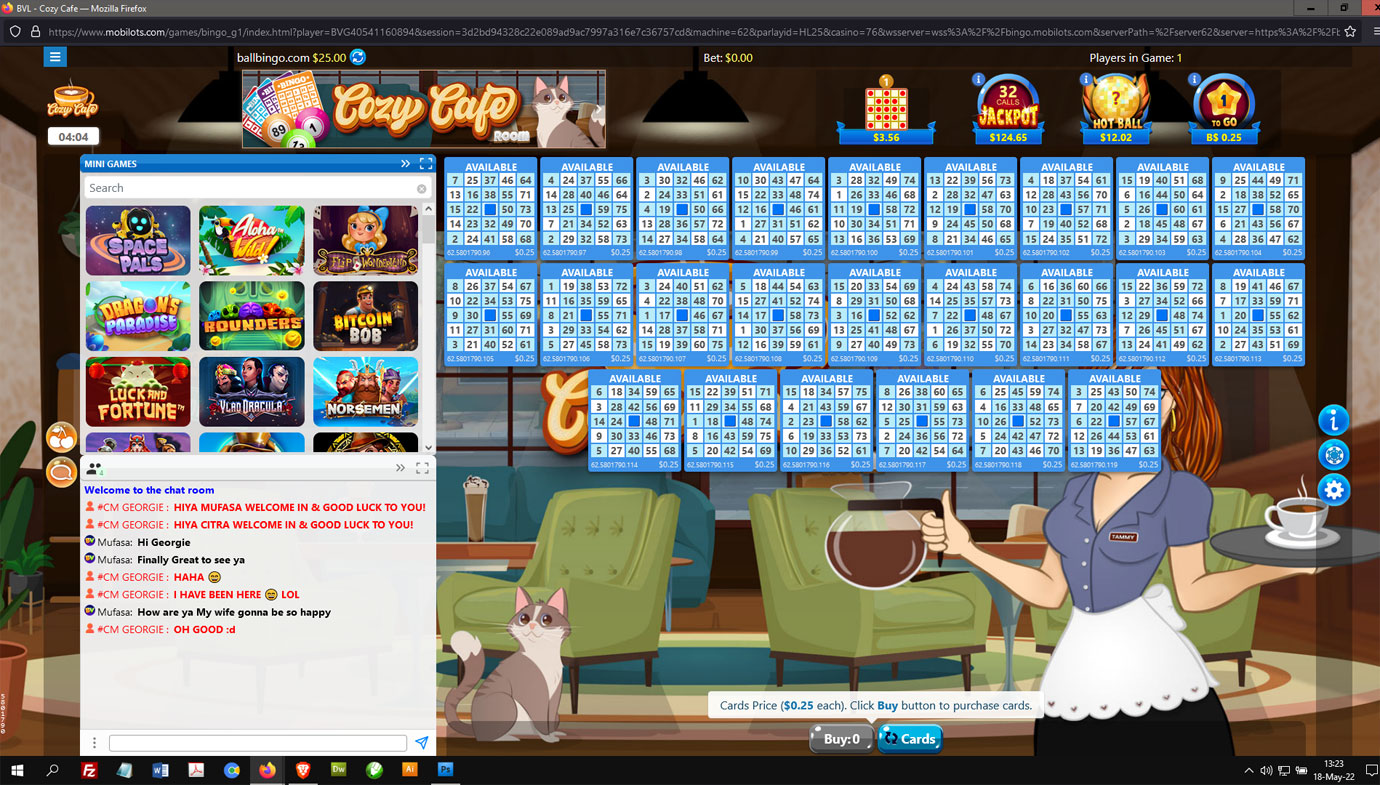
How to Play 75 ball bingo
We all know 75-ball bingo. The card has 5 rows and 5 columns. The letters B-I-N-G-O always appear at the head of the columns in order. The center square is the Free Place. So there are 24 numbers on the standard card. One of the biggest strategies in 75-ball bingo is to find cards with few repeating numbers!
There are millions of different card faces! So take a minute, look through the cards, and pick a few different ones to play. Your chances of winning will go up! Remember, after you select your cards you are mostly in the hands of Lady Luck.
If you’re used to playing 75-ball bingo with only straight line patterns, you’ll love playing online or in a Bingo hall where they play a different pattern every game.
There are so many possible patterns in the 5×5 grid! You must always be aware what pattern you are trying to complete. There is always a Bingo Board that shows the pattern for that particular game.
The patterns are one of the big draws of 75-ball bingo. Many people like 75-ball because they love the tension that builds slowly as more and more numbers are called. When you play online, the computer tells you how many numbers you need to win.
The color of your online card changes when you are “three away”, then the color changes again when you are only “two away”. Every player feels great excitement when the color changes for “one away”. When you play many cards online you will have a color-fest on your screen!
At the start of a new game the caller will say “eyes down” to get your attention on your cards. During the game no one likes any kind of distraction. Online Bingo sites offer chat rooms where you can talk whenever you want.
The caller calls out a letter and a number. For example, B-5 will always be in the first column; I-20 will always be in the second column; and so on. Players cover the numbers on their cards, slowly getting closer to completing the pattern.
Finally, a player completes the pattern and calls BINGO. Sometimes there is more than one winner at the same time. Then the house shakes from the happy calls of BINGO!
Bingo leads to much friendliness and camaraderie. At live Bingo halls people want to concentrate during a game but love to chat between games. Often people play Bingo when their friends are playing. Online chat rooms give players a way to talk to each other without bothering others.
Summary
Many Bingo players who like 75-ball bingo the most, enjoy playing a different version of Bingo once in a while. But they come back “home” to 75-ball bingo. Maybe it brings back great childhood memories or maybe they are just traditionalists at heart.
But one thing is sure. As the number count rises and no one has won the game yet, everyone is getting ready for the magic moment when they can yell BINGO! The veteran in bingo: 75 Ball Bingo Game. There are several online ball games available on the market.
80 Ball Bingo Rules
You cut your Bingo teeth as a kid, playing what the only bingo option was around. But Bingo has come a long way from being a popular birthday party treat. A time came when you were introduced to 90-ball Bingo.
And then you discovered that the game you knew simply as Bingo was now called 75-ball Bingo. But you’re someone who’s always looking for a change of pace. And so along comes 80-Ball Bingo!
How to Play 80 ball bingo
The card in 80-ball bingo is similar to the card in 75-ball Bingo, but there are two big differences. The 80-ball bingo card is 4 squares by 4 squares and there isn’t a Free Space. The columns on the 80-ball bingo card all have a different color. From left to right, the colors are red, yellow, blue, and silver.
Here’s an interesting tidbit: the 80-ball bingo card once had shutters, and players used them to cover their numbers. So the game was sometimes called Shutterboard Bingo.
Although the rules are the same as for 75-ball Bingo, the games are somewhat different. Because there are 80 numbers, the games may take a bit longer than in 75-ball Bingo. But there are fewer numbers to cover so some games are shorter. There are hundreds of patterns in 80-ball. Many of them are familiar to you.
Of course, the caller calls out the numbers, but in 80-ball bingo they don’t call the letters B_I_N_G_O! The players cover the numbers on their card(s), and the first to complete the pattern is the winner.
What is new in 80 ball bingo?
Playing 80 ball bingo makes a refreshing change from other types of bingo. To get started, all you need to do is choose a card or ticket to play. Tickets are different from the ones that you get in 75 ball and 90 ball and are called shutter tickets. They are tickets with 16 numbers arranged in 4 coloured columns.
The columns are coloured specific colours to make the referencing easy – they first colour is red, second yellow, third blue, and the final one is silver. Each column of colours can take 4 numbers, with the first column having the first 20, second, the second 20 and so on.
Once you have picked up the tickets you want, then you buy them. You have to confirm the tickets before pressing the buy button so that there are no mistakes when you buy! Once you have your tickets then the numbers are called out on the call board. If you are lucky enough to complete a pattern then you can walk away with a cash prize.
The most common pattern is a vertical line or a horizontal line. As well as this, there are several different patterns that you can win with diagonal lines (which speak for themselves), four corners, which is getting a number is each corner, centre square, which involves getting all the middle numbers or Big X.
Other bingo halls also give special jackpots out depending if you manage to get a pattern in a set number of balls. The big advantage of 80 ball bingo is that the game is commonly a lot faster than the 75 ball or 90 ball version. This means you can get more games, and more excitement wherever you play.
More bingo websites are offering 80 ball, and if you want to get started playing bingo for the first time, or you want a change from your familiar version, you have every opportunity to spread your wings. If you are new, then you are in for a treat because you will have one of the most exciting games for you to play.
Basic information of 80 ball bingo
As one thinks of bingo games, the immediate thought that comes to the mind are the game varieties, the 75 ball bingo game and 90 ball bingo game.
These are the games we all have played and also enjoyed to the utmost. But the bingo games have again come up with a completely new form of bingo games, called the 80 Ball Bingo Game.
The 80 Ball Bingo Game is a game, which has its specialty stemming from the distinct bingo cards that it uses while playing. The game is very unique in character, and it is a brand new variety of the online bingo games.
In this bingo game the tickets or the cards are made into 4 rows and 4 columns. Here every column sports a different colour. When the numbers are called up by the announcer, the cards in the 80 Ball Bingo game are marked off by closing the slides, thus covering them. Hence, it is also known as a shutter.
Unlike the 75 Ball Bingo and 90 Ball Bingo, the 80 Ball Bingo game is a faster game, which surpasses both the other bingo games. This is one of the key and most important reasons as to why many players have opted for this online bingo game.
The game is extremely fast – paced and is also very action packed. Thus, it allows the player to experience a whole lot of speed and thrill.
Purchasing the Card: To start playing the game, the player first needs to click on the icon saying “ticket selector” situated just above the cards, to choose the kind of cards he wants to play with. The 80 Ball Bingo game card board is similar to a 75 ball bingo but with slight modifications.
The card consists of total possible 80 numbers with 5 rows of 16 digits. These numbers are again divided into a group of 4 with different colours and after an interval of 20 digits.
Winning Patterns One of the most interesting and exciting features of the 80 Ball Bingo game is the wide variety of winning patterns it offers.
The patterns include:
- Full House: A full house win is for the first player who crosses off all the numbers of the card
- Horizontal Line: the player who crosses off the horizontal lines first, wins the associated prize
- Diagonal Lines : the first player to cross of the number in a diagonal line
- Vertical Lines: the first player to cross off the numbers in a vertical line
- Big X: the player who first crosses off the numbers in form where it makes an ‘X’
- Letter S: same as above except that the format formed is letter ‘S’
- Double Line: the first player to cross off two lines either vertically or horizontally.
Any player who has played a 75 ball bingo and a 90 ball bingo will find an 80 Ball Bingo Game wonderfully easy to play. As regards to banking, the sites are perfectly secure with regards to any fraud or criminal activity.
Like other Bingo games, the 80 Ball Bingo Game offers the player incredibly good customer support, which is available on a 24 hour basis, huge bonuses and massive jackpots.
Summary
80-ball bingo is just one of several varieties of Bingo being played nowadays. Most Bingo players have their favorite version of the great classic game.
But even die-hard fans of one particular version enjoy playing the other versions from time to time. If you’re already familiar with 80-ball bingo you know what an enjoyable version it is. But, if you haven’t tried 80-ball bingo yet, give it a try. We think that you will be pleasantly surprised.
90 Ball Bingo Rules
Americans are certainly familiar with the great game of Bingo. You played it as kids. But that game is quickly making room in the world of Bingo for many different varieties of the game. One such variety that is actually the most popular form of bingo in Great Britain, Australia, and Europe, is called 90-ball bingo.
90-ball bingo is also quickly becoming very popular in North America. Some people who closely follow the trends in the world of Bingo predict that, even in North America, 90-ball bingo will overtake traditional 75-ball Bingo in popularity the near future.
How to Play 90 Ball Bingo
As is obvious from its name, 90-ball bingo is played with 90 balls or numbers. The card used in 90-ball bingo is quite different than the standard 75-ball Bingo card. The 90-ball bingo card has three horizontal rows and nine vertical columns.
The game is based on the rows. There are only 5 numbers in each row giving a total of 15 numbers on a card. So there are many open spaces on a 90-ball bingo card.
The numbers are called out without the letters B-I-N-G-O. A 90-ball bingo game is played in three stages. In the first stage players try to cover the five numbers in any row. The second stage has players trying to cover the numbers in any two rows. But here is one of the attractions of 90-ball bingo. After the first stage is played and someone, has won, players keep their cards intact for stages two and three.
So if you covered a few numbers but didn’t win stage one, you may be well-positioned to win stage two or even stage three. In stage three, everyone goes for a “full house”. This means they try to cover all 15 numbers on their card.
It is true that stage one may be a bit slower than many players like, because of the larger number of balls, but the overall game is faster than 75-ball Bingo.
Almost always, different players win the different stages in 90-ball bingo. When it does happen that one player wins all three stages, we say that the lucky player has “scored a hat trick”.
Many online sites offer 90-ball bingo. Even some players who love the patterns and mounting tension of 75-ball Bingo, enjoy the somewhat faster pace of 90-ball bingo. Some sites have even begun to introduce patterns in 90-ball bingo. But it is still usually played in the original form.
How to get started with 90 Ball Bingo
Playing bingo could not be easier – all you need to do is buy your tickets and wait for the numbers to be called out. If you are lucky then you might find yourself winning a considerable amount of money.
In the UK, the biggest jackpot winner won more than a million pound jackpot, so there is every chance of you getting a life changing amount of money when you sit down and play.
When you decide that you want to play a game, then you should select your tickets. Confirm that you want to buy them, and then they are yours. You can then decide when you want to start the number board to start calling the numbers out.
The numbers are marked off your card automatically – in 90 ball bingo you have 3 rows of numbers, with 9 columns. There are 15 numbers printed on the tickets, and you win if you get specific combinations – namely a line, 2 lines, or a full house which is all of your numbers being called out.
You can buy tickets in groups of 6 – this gives you a chance to get a number each time a number is called – when you are playing online you get the chance of playing with as many tickets as you like.
The numbers are called out via a call board, so there is no mistaking whether your number is out or not, if you are lucky enough to win, calling bingo is up to you – but if you win, it is worth a shout. You should also look out for any bonus games or side games that are on offer – some of them are really worth entering!
The 90 Ball Bingo Game has its origin in the United Kingdom and Australia
The 90 Ball Bingo Game is very similar to the 75 Ball Bingo Game. Here the player needs to purchase the bingo cards/ tickets and then fills in the numbers, as per the numbers announced by the caller. If the player fills all the numbers in the winning pattern that the game requires, he wins the game.
Although there is the same basic foundation in both the 90 Ball Bingo and the 75 Ball Bingo, yet there are some major differences between these games. For instance, in the 90 Ball Bingo Game the cards or the tickets have 3 rows and 9 columns.
There are digits ranging from 1 to 90 in five squares of each row, while the rest of the squares are left blank. The basic difference is in the card arrangements. A 75 ball bingo uses a single card, whereas a 90 Ball Bingo uses a strip that contains 6 tickets.
The game usually has three patterns, and the winning patterns are always the same. As each game has 3 patterns, there are prizes associated with each pattern in the game.
The patterns are as follows:
- Single line across: the first player, who crosses off any of the horizontal lines on the card, wins the game.
- Two lines across: the first player, who can cross off the full two lines amongst any of the horizontal lines on the card, wins the game.
- A Full House: The first player to cross off all the three horizontal lines on the card, in other words all the squares are crossed off, wins the game.
The 90 Ball Bingo Game is usually played always with a strip of 6 tickets. The all 90 digits are distributed in a Dab-all format throughout in each of the strip (containing 6 tickets).
At each bingo call a number is crossed off from the strip (any of the 6 tickets), which means that every possible number from 1 to 90 is covered if a strip is played is played in a 90 Ball Bingo Game.
Purchasing of the card
The player can purchase a card, simply by selecting the kind of card he wants to purchase. He just needs to click on the card, using his mouse. Then all he needs to do is to click on the icon, which says ‘Buy Tickets’. The screen will show ‘Ticket Bought” and the card will change its colour. Now the player is ready to play.
To show the player how far he is from winning the Bingo game, the 90 Ball Bingo Game makes use of different colours and corresponding digits. The colour changes will indicate how far the player is from winning the game.
This game is offered through various sites in their own styles and also with several different variations in the form of playing. The sites have different layouts and design also.
The colours are vibrant to make the player feel good while playing. The 90 Ball Bingo Game is a fun experience that will make you smile and gives you the opportunity to win some good money.
| Bingo Variant | Grid Matrix Layout | Total Ball Pool | Primary Winning Criteria | Pacing & Session Style |
|---|---|---|---|---|
| 30-Ball (Speed) | 3×3 grid (9 active numbers) | 30 balls | Full card coverall (Blackout). | Ultra-Fast (Settles in 1-2 minutes) |
| 50-Ball | 2×5 grid (10 active numbers) | 50 balls | 1 horizontal line, followed by a Full House. | Fast-paced modern alternative. |
| 52-5 (Card Bingo) | 5 playing card slots (1 hand) | 52-card traditional deck | Covering all 5 cards in your dealt poker hand. | Novelty card-flip mechanism. |
| 5-Line (Swedish) | 5×5 grid (25 active numbers) | 75 balls | 5 separate prizes awarded sequentially (1 to 5 lines). | High-action combination style. |
| 75-Ball (Classic US) | 5×5 grid (24 numbers + 1 free space) | 75 balls | Completing specific geometric shapes or lines. | Traditional, steady pacing. |
| 80-Ball (Shutter) | 4×4 grid (16 active numbers) | 80 balls | Horizontal, vertical, diagonal lines, or corner patterns. | Quick, color-coded columns. |
| 90-Ball (Classic UK/Aus) | 3×9 grid (15 numbers + 12 blanks) | 90 balls | 3 progressive stages: 1-Line, 2-Lines, then Full House. | Community-focused network style. |
Frequently Asked Questions
What does a Full House mean across separate bingo variations?
A Full House requires marking off every active number on your grid. This is the final, highest-paying prize tier. Criteria adjusts by variant: 9 numbers (30-ball), 24 numbers (75-ball), or 15 numbers (90-ball).
How does a progressive jackpot function under online bingo rules?
Progressive jackpots pool a fixed percentage from all network ticket sales. It is awarded if a player hits a Full House within an ultra-low call threshold (e.g., 31 calls or fewer for 90-ball). If unclaimed, the total pool rolls over.
Why does a standard 90-ball bingo ticket contain so many blank spaces?
The blank slots are a mathematical design constraint for 6-ticket strips. A 90-ball card features 15 numbers and 12 empty spaces across a 3×9 matrix. A full 6-card strip ensures all numbers 1-90 appear exactly once, guaranteeing you mark a number on every ball call.
Can I manually choose the specific numbers printed on my bingo cards?
No, traditional numbers are randomly generated. Standard matrix sheets are locked for fairness. However, newer novelty hybrids like 52-5 card bingo allow players to choose custom card hands.
What are the primary differences between bingo books and single card flyers?
The choice depends on session design and budget:
- Bingo Books: Multi-page booklets offering a sequence of 10+ game rounds.
- Single Card Flyers: Individual, high-premium sheets, usually with higher costs and larger jackpots.